Science |
||
Electricity      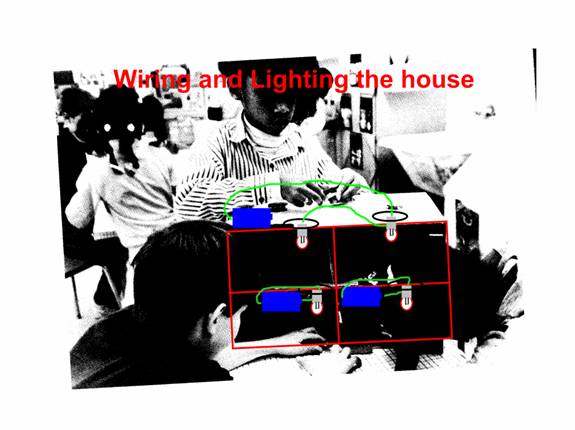
Ecosystems 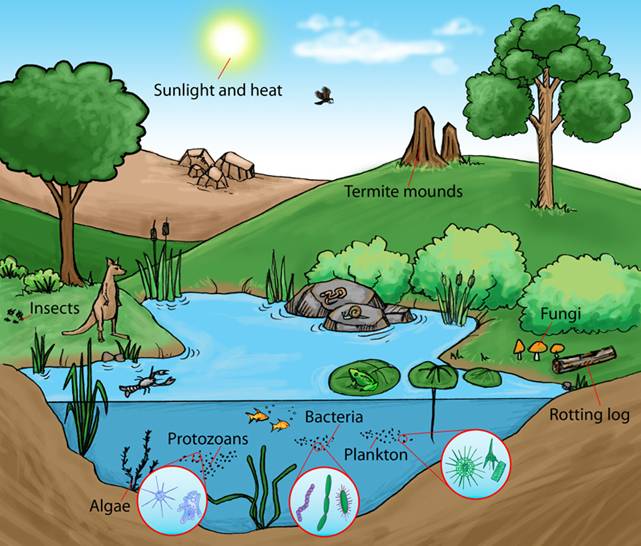 Minerals: Moh's Scale of Hardness tests hardness A fingernail has a hardness scale of 2.5 A penny has a hardness of 3.0 A nail has a hardness of 6.0 The hardest mineral on Earth is Diamond The softest mineral we studied in class is Talc
Light Test Opaque: Allows no light through Translucent: Allows some light through Transparent: Allows all light through The three terms geologists use to describe a mineral's ability to transmit light are; opaque, translucent, and transparent.
Streak Test Streak Test tests the true color of a mineral
Test of Magnatism Use a stong magnet and hold it to the rock or mineral If the magnet is attracted to the rock or mineral, then the rock or mineral has magnet properties.
Definitions: Cleavage: When a mineral breaks into flat pieces Metallic: Minerals that have a luster like polished metal Luster: The way a mineral reflects light
Rocks and Minerals Rocks and minerals are found on the Earths crust. The crust is the thinnest layer of all the Earth's layers.
Some rocks and minerals like the ones below glow under a black light because they have fluoresent properties. 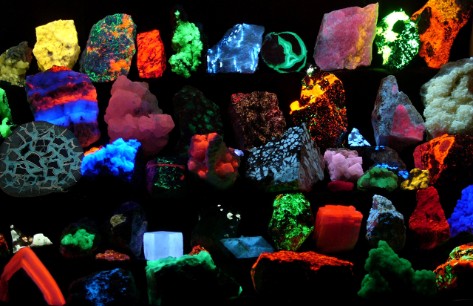 There are 3 types of rocks found on Earth and many different minerals. The 3 types of rock are: 1.) Igneous - rock produced under conditions involving intense heat from molten magma; rock of volcanic origin. There are two kinds of igneous rock; igneous intrusive, hardens inside the Earth's crust, and igneous extrusive, hardens on top of the Earth's crust. 2.) Metamorphic - Rock or minerals altered from their original form by intense pressure and heat. Structural change or metamorphism takes place to change the rock into a new type of rock. Metamorphic rock is formed when intense pressure or heat changes the rock into a new type of rock. 3.) Sedimentary - Rock formed by accumulation of mineral and organic fragments deposited through erosion by water (rain), ice, or wind. When the sediments deposited become tightly compacted by many layers on top, the weight or pressure compacts the sediment to form rock. Rock Cycle Like the water cycle, rocks have a cycle also. You can see the rock cycle in action at: http://www.classzone.com/books/earth_science/terc/content/investigations/es0602/es0602page02.cfm To learn more about Rocks and Minerals, visit: http://www.nature.nps.gov/geology/usgsnps/rxmin/rock.html http://www.open2.net/sciencetechnologynature/worldaroundus/geologytooklit/rocktypes_embedded.html |
Minerals make up rocks, but rocks do not make up minerals!
14 Minerals we are studying: A - Feldspar M - Halite B - Quartz N - Gypsum C - Galena R - Biotite D - Calcite L - Talc E - Fluorite K - Sulfur F - Graphite J - Muscovite G - Hematite I - Magnetite 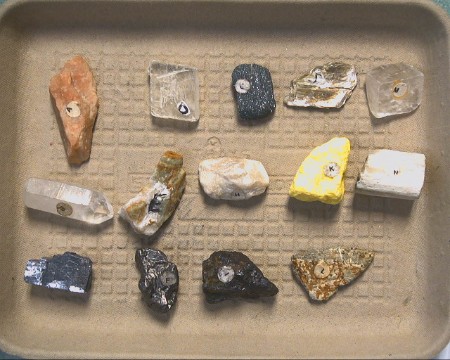 The following are common uses for minerals we studied: A. Feldspar: Ceramics (both porcelain and glazes), medicines such as Kaopectate (from kaolin, a weathered form of feldspar), household abrasive cleaners, and glassmaking. B. Quartz: Radios, watches, computers, jewelry, glass, abrasives, and optics. C. Galena: Source of lead, used in batteries, paints, radiation shields, electronic components, and ammunition. D. Calcite: Fertilizer, medicine, and cement. E. Fluorite: Enamel, optics, steel manufacturing, and toothpaste. F. Graphite: Lubricant, electrodes, pencils, high-temperature tools, batteries, and sports equipment. G. Hematite: source of iron ore, paint pigment (red ocher) H. Gypsum: Plaster (orthopedic casts, drywall in walls of homes and buildings), fertilizer, furnace and stove linings, sculpure (only from alabaster), cement, and baked goods I. Magnetite: Good source of iron ore, and used as lodestone in making a direction compass. J. Muscovite: Electric inslulators, furnace and stove windows, and once used in Moscow as windows because it was so thin. K. Sulfur: Medicines, gunpowder, fireworks, fungicides, matches, fertilizer, and found naturally in many foods which helps change food to energy and your bones grow. L. Talc: Baby powder, hand lotion, lipstick, paint, and paper. M. Halite: Salt, food additive, sodium hydroxide, paper, soap, and pertroleum manufacture. The 12 rocks we are studying: 1 - Granite Igneous Rock 7 - Obsidian Igneous Rock 2 - Gneiss Metamorphic Rock 8 - Basalt Igneous Rock 3 - Conglomerate Sedimentary Rock 9 - Pumice Igneous Rock 4 - Limestone Sedimentary Rock 10 - Slate Metamorphic Rock 5 - Shale Sedimentary Rock 11 - Marble Metamorphic Rock 6 - Sandstone Sedimentary Rock 12 - Schist Metamorphic Rock 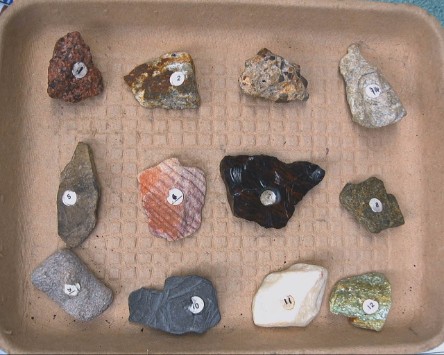 Texture is where geologist study the feel, or smoothness and roughness of a rock. Study the rock Cycle and how rocks can become different rocks.
Magnetism 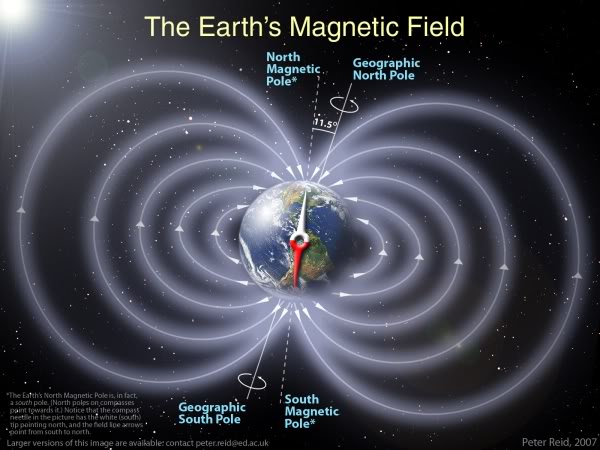 |
|
